NHS GeneMate
A safe space for patients at different stages of the genetic journey.
partnered with NHS Imperial Healthcare Trust
- Duration
- 5 Months
- SEP 2020 - JAN 2021
- Team
- Hyunjin Jo
- Yasuhiro Yamauchi
- Li Ning
- Geetika Kejriwal
- My Primary Role
- Design Research
- Qualitative Research
- Rapid Prototyping
- Methods
- Interview
- Participatory Design (co-create, co-operate, and co-design)
- Persona
- User Journey Map
- Prototyping
- Tools
- Figma
- Keynote
- MURAL, Zoom
The Challenge
Improve the experience of genetic testing for inherited cancer susceptibility syndromes patients and their family members.
The Outcome
1. Stakeholders were engaged through a collaborative solution design process.
2. Introduced the GeneMate service concept to partners and broader audiences, including professionals, patients, their families, and charities.
3. Presented the GeneMate case study, showcasing the potential benefits of social innovation.
Discover
Based on the desk research we have identified:
1. The launch of genomic medicine services in the UK aimed to enhance population health and fulfill commitments outlined in the NHS Long Term Plan. Building on the success of the 100,000 Genomes Project by Genomics England, the current focus is on expanding access to genetic testing across the population and transitioning towards precision medicine.
2. Genomics is very new for the patients but also for the NHS staff. Massive training programmes are being rolled out in collaboration with Health Education England (HEE) under the name Genomics Education Programme (GEP). The focus is on workforce development, grants and education at higher levels and funding research.
3. Genetic testing for particular diseases focus on particular gene mutations, for example: testing for breast cancer susceptibility, people are generally tested for BRCA1 and BRCA2 mutations. Tests might involve some other mutations depending on the family history of the patient involved.
In addition to desk research, we conducted interviews with patients, their families, and practitioners. Through these efforts, we have identified and reached the following conclusions:
1. The decision to investigate hereditary cancer was unanimous as the data was clear. 1 in 2 people in the UK will be detected with cancer in their lifetime. Of this number 5% to 10% may have inherited cancer.
2. As we delved deeper into our research on gene mutations, we uncovered a significant prevalence of patients afflicted with BRCA 1 and BRCA 2 alterations.
3. These mutations are associated with breast and ovarian cancer, presenting a substantial health concern in the UK. Notably, nearly 40% of genetic tests conducted are targeted towards detecting these mutations.
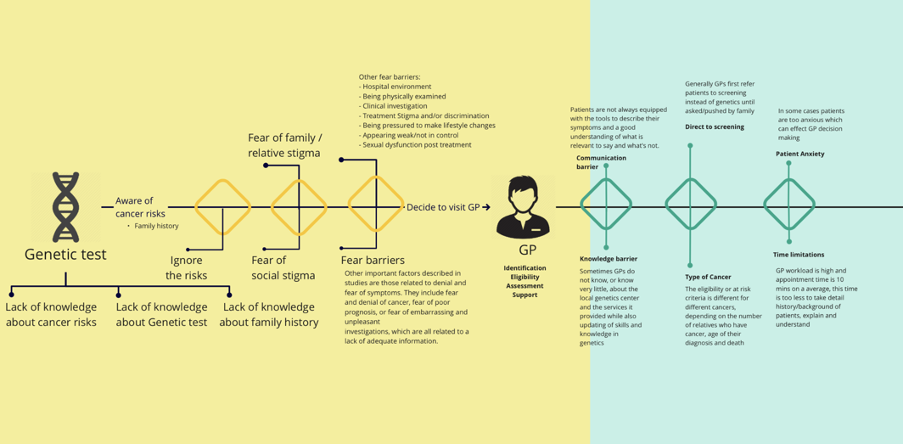
Following interviews with GPs and strategic advisors at Macmillan Cancer Support, we developed a user journey map highlighting challenges encountered by both patients and GPs. These issues encompassed fear, stigma, lack of awareness, knowledge gaps, time constraints, and anxiety. Concurrently, we analysed blogs, forums, and online communities to gather additional insights, refining our understanding of the user journey in greater detail.
Following the GP referral, patient information is forwarded to the genetic counselor, who initiates correspondence with the patients through a series of letters. The steps involved are as follows:
1. Gather family history information, including diseases and cancers, specifying types of cancer, age of diagnosis, and relation to the individual.
2. The genetic counselor then evaluates whether a person requires testing or not.
3. Following this, the information is sent via mail. If they are eligible, they are scheduled for a session with a genetic counselor; otherwise, they receive information about lifestyle changes.
4. During the appointment, eligible patients and the genetic counselor engage in discussions regarding the test details, expectations, and the subsequent steps to be taken.
5. After a few weeks, patients receive their test results, which can be communicated to them via phone, mail, or in-person appointment according to their preference.
6. In the case of a positive result, patients are informed about the subsequent steps, which may include regular screening, prophylactic surgeries, and connection with relevant departments for further assistance.
Upon consulting with experts, we discovered additional gateways to testing, including referrals from oncologists and surgeons.
Testing availability primarily relies on affected patients, those diagnosed with cancer and tested for mutations, undergoing testing.
Conversely, unaffected relatives with a family history of mutations can obtain GP referrals easily, often receiving a referral letter from the affected patient. Nonetheless, the primary challenge remains in motivating affected patients to undergo testing and implementing strategies to increase test uptake.
Key insights
1. Cancer not only impacts the individual patient but also casts a shadow of inherited risk over multiple generations within the family, potentially straining interpersonal relationships.
2. The process of genetic testing is intricate: it begins with affected patients, those currently battling cancer, and if they test positive, extends to their family members for further testing.
3. The reluctance toward genetic testing often stems from the pervasive fear and uncertainty surrounding cancer within the entire family unit. Initiating discussions about the risk of inherited cancers with family members can be exceptionally challenging, particularly if it has never been a topic of consideration before.
Persona
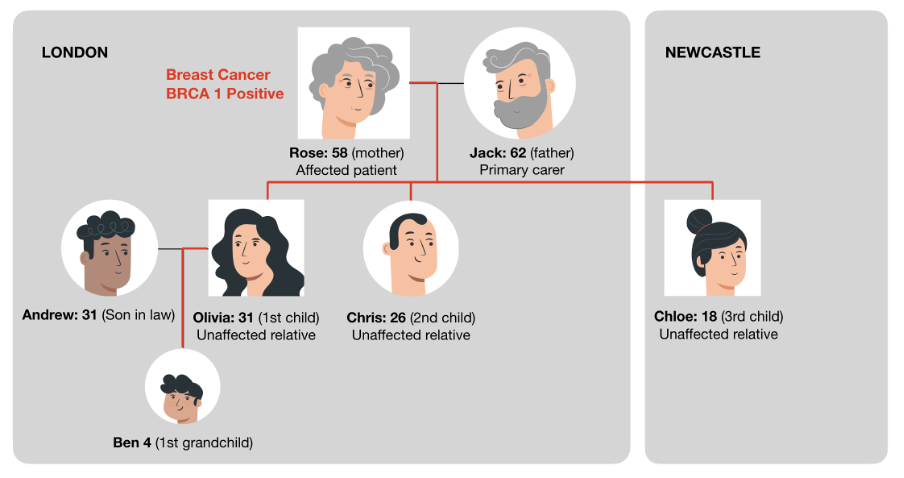
Rose is a middle-aged woman who gets diagnosed with breast cancer and tests BRCA 1 positive, meaning that the three children get the same genetic mutation that could predispose them to cancer. All the children have a 50% chance of inheriting the faulty gene and passing it to their children too.
Scenario
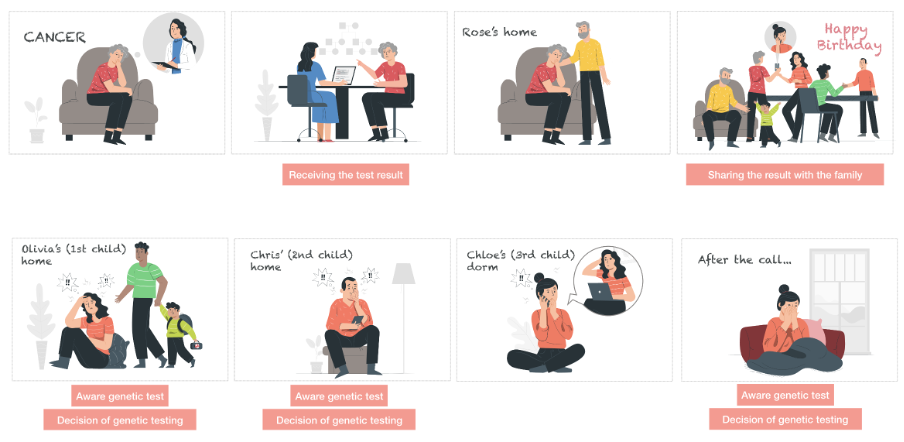
In Rose’s case, she was diagnosed with breast cancer three months ago and was recommended a genetic test by her oncologist. Rose did the genetic test and just found out she has faulty BRCA 1, which could be hereditary to her children.
Frankly, this tragic news makes the family more vulnerable. She told her husband and felt guilty. By all means, it will be difficult for her to tell the children. She has to let them know, it can save their lives. She waited and waited, for months, she just couldn't tell the news over the phone.
One day, during her husband's birthday, when all family members gather except for Chloe who couldn’t come because of study, the news gets shared. Back at home, Olivia and her husband are worrying about their little child and their plan to have another baby. She thinks about getting a genetic test, but what if she is also positive? Whether they have a baby or not?
When Chris got home, he was researching BRCA1 and he realised this gene can also cause prostate and pancreatic cancer, his outlook has dramatically changed. For the last month, this family’s life has been filled with worries and uncertainty.
Chloe calls her family more often. During a call, her sister talks about her worries about passing faulty BRCA genes to her children. The secret was revealed. Her sister had to tell her what happened during their father's birthday. Chloe is sad, disappointed, and shocked. It hurts her feeling that her family kept the secret from her. And her future, what if she also gets the faulty gene and ends up like her mother?
Develop
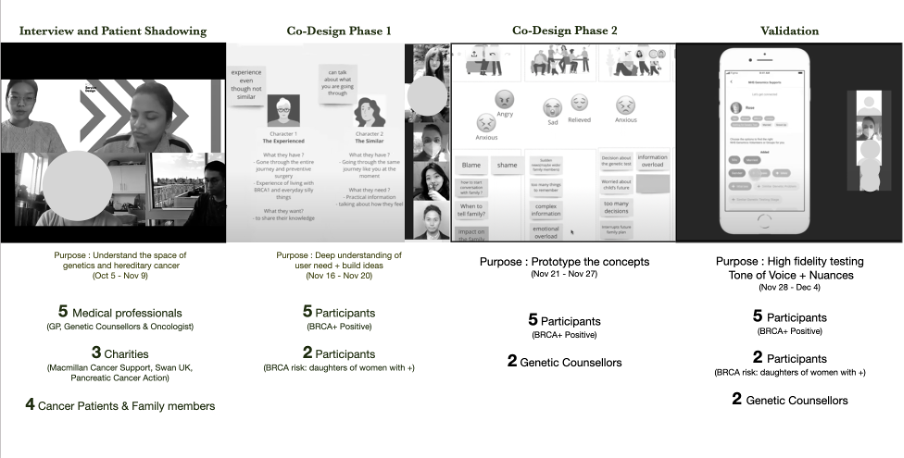
We refined the idea through collaborative sessions with genetic counsellors and patients. This involved interviewing and shadowing patients, conducting two co-designing sessions, and performing an expert review to validate the final concept.
Mission and Vision
To develop our design solution based on our research and findings, our team needed design principles to share the same understanding of our service which will guide us to develop our idea concepts from the next step.
Design principles:
- 1. Be mediator for family
- 2. Deliver clear information
- 3. Enable smooth communication
- 4. Guide possible next steps
Mission statement:
Our mission is to assist family members in decision making and planning next steps through clear genetic information delivery and smooth communication.
Introducing GeneMate
We developed our idea further based on the reframed project brief:
How might we deliver practical and emotional support to patients and family members that is tailored to individuals at different stages?
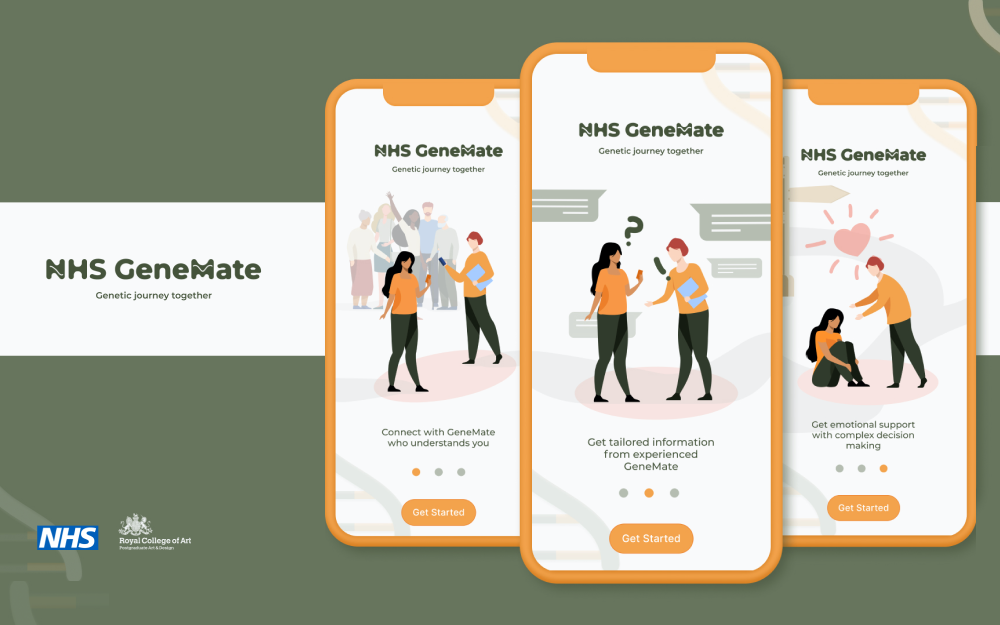
GeneMate is an emotional support group for hereditary cancer patients and their family members through all stages of genetic test and cancer treatment. By matching users with a person or a group that has been through the same journey, people can get emotional support and practical tips that assist decision making during this long and complex journey.
- 1. Connect with GeneMate who understands you.
- 2. Get tailored information from experienced GeneMate.
- 3. Get emotional support with complex decision making.
Deliver
Service Benefits

Social prescribing empowers patients to approach medical appointments feeling better informed, equipped with targeted questions, and a clearer understanding of what to anticipate during their sessions. This not only enhances patient preparedness but also alleviates the burden and time constraints faced by NHS medical staff. By extrapolating potential outcomes, if the number of genetic-tested UK citizens and their family members using our service reduces GP visits by just one per person annually (at an estimated cost of £22.60 per visit - Pf Media, 2018), this could result in annual savings of approximately £370,000 in reduced GP visits.
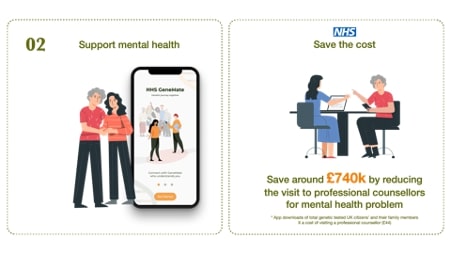
GeneMate offers patients and their family members enhanced mental and emotional support throughout their journey, facilitated by experienced individuals who have undergone similar experiences. This support can lead to a reduction in the mental health burden among hereditary cancer patients and their relatives, potentially decreasing the need for professional counseling sessions. If each patient and their family member reduces their visits to professional counselors by at least one session annually (estimated at £44 per visit - Macmillan Cancer Support, 2015), this could result in annual NHS savings of approximately £740,000.
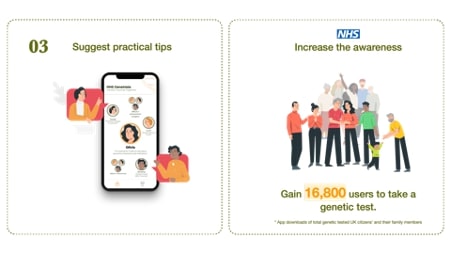
GeneMate offers practical guidance to assist individuals in navigating their genetic testing journey, with the expectation of heightened awareness and user engagement. This aligns with the objective of integrating genetics into routine care. Moreover, the development of a specialized community fosters trust among test takers. This increased awareness and engagement are anticipated to reach approximately 16,800 users annually within the UK population, benefiting the NHS.
System Map
Social prescribing empowers patients to approach medical appointments feeling better informed, equipped with targeted questions, and a clearer understanding of what to anticipate during their sessions. This not only enhances patient preparedness but also alleviates the burden and time constraints faced by NHS medical staff. By extrapolating potential outcomes, if the number of genetic-tested UK citizens and their family members using our service reduces GP visits by just one per person annually (at an estimated cost of £22.60 per visit - Pf Media, 2018), this could result in annual savings of approximately £370,000 in reduced GP visits.
GeneMate offers patients and their family members enhanced mental and emotional support throughout their journey, facilitated by experienced individuals who have undergone similar experiences. This support can lead to a reduction in the mental health burden among hereditary cancer patients and their relatives, potentially decreasing the need for professional counseling sessions. If each patient and their family member reduces their visits to professional counselors by at least one session annually (estimated at £44 per visit - Macmillan Cancer Support, 2015), this could result in annual NHS savings of approximately £740,000.
GeneMate offers practical guidance to assist individuals in navigating their genetic testing journey, with the expectation of heightened awareness and user engagement. This aligns with the objective of integrating genetics into routine care. Moreover, the development of a specialized community fosters trust among test takers. This increased awareness and engagement are anticipated to reach approximately 16,800 users annually within the UK population, benefiting the NHS.
Are you interested in my project and want to know more?
Contact me!
guswls1994@gmail.com