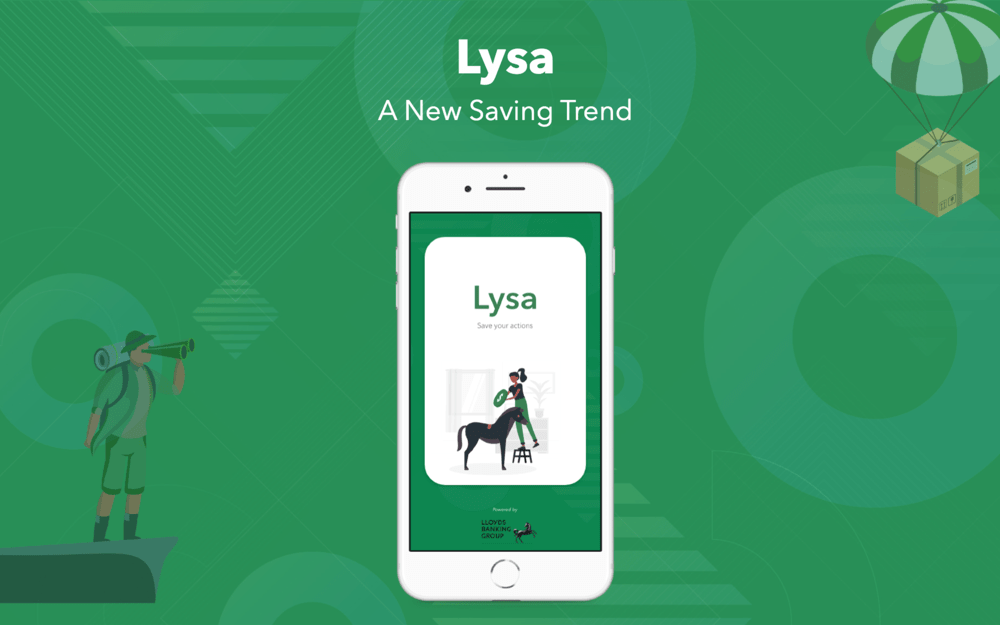
- Duration
- 4 Months
- 2019. 02 - 2019. 05
- 2 Months further research
- 2019. 05 - 2019. 06
- Team
- Hyunjin Jo
- Geetika Kejriwal
- Sara Monacchi
- Saitej Pisupati
- Kotoko Kimura
- My Primary Role
- Design Research
- Qualitative Research
- Rapid Prototyping
- Methods
- Interview
- Persona
- User Journey Map
- Prototyping
- Tools
- MURAL, Zoom
- Adobe XD
- Illustrator, Photoshop
- Premiere Pro, After Effects
The Challenge
Project Brief: How might we help vulnerable customers manage their money better
Reframed Task: Improving financial resilience to prevent financial vulnerability in an early stage of life
The Outcome
1. Micro-saving application for the young Lloyds Banking users.
2. Use daily activities to trigger automatic micro-saving.
3. Get inspired and help from communities to save better.
The Process

Discover
1. According to FCA (Financial Conduct Authority), 50% of UK adults (25.6 million) display one or more characteristics that signal their potential vulnerability. And more than 16m people in the UK have savings of less than £100, a study by the MAS (Money Advice Service) has found.
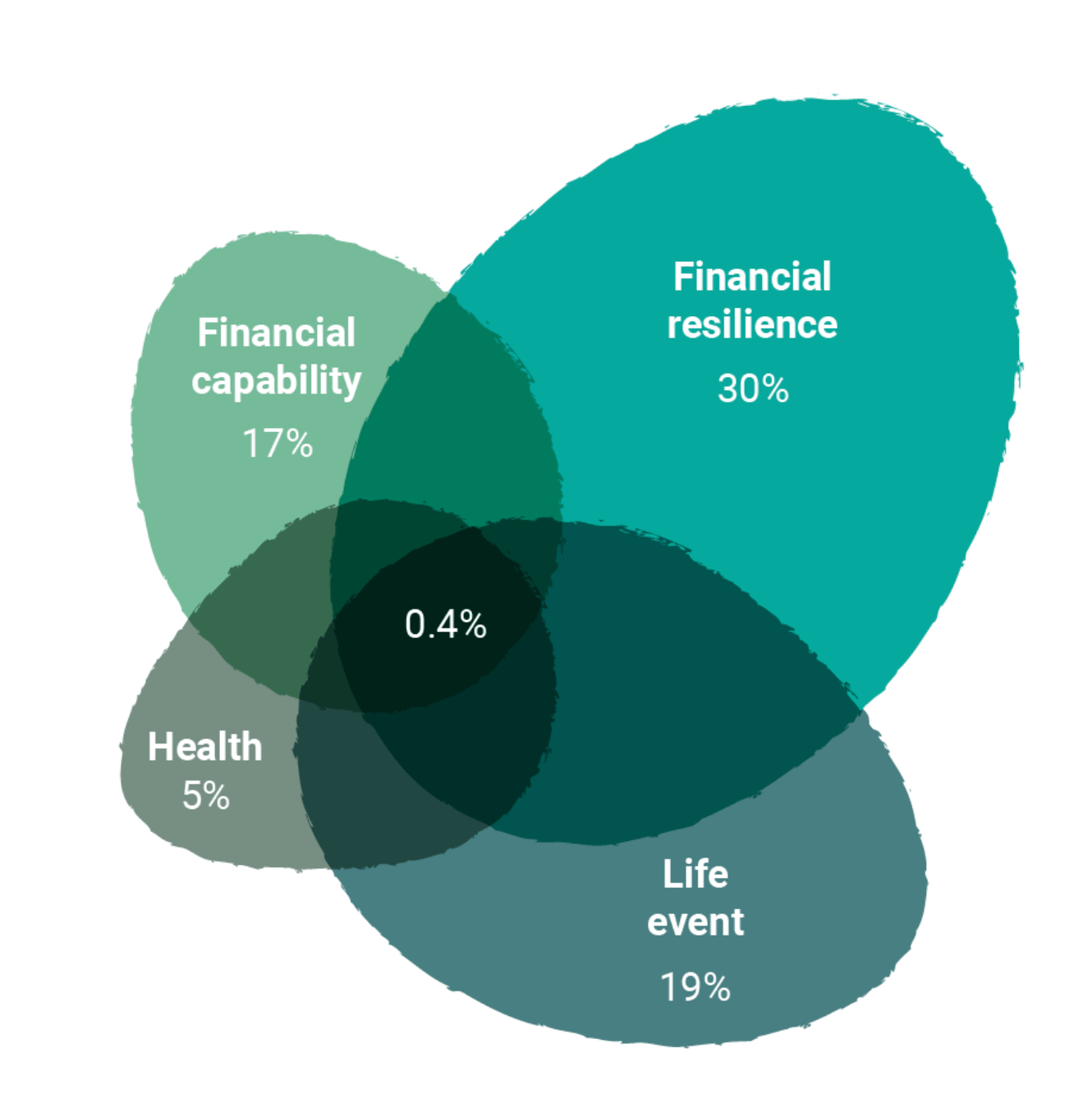
Simplified proportion of UK adults that display each of the drivers of vulnerability (from Financial Lives 2017. Base: UK adults (12,865))
2. UK adults can become vulnerable and it is largely because they are not financially resilient according to FCA. Building a financially resilient customer is where is our focus lies and we believe Lloyds can help in building financial wellbeing.
3. FCA provided factors that reduces financial resilience: low or erratic income, over indebtedness, low savings, low emotional resilience, and lack of support structure. Customers can be financially resilient by cultivating habits of savings, debt reduction, and smart money management.
4. Having a pot of money that can be drawn upon in times of crisis enables people to cope when they experience shocks to their income or expenditure. Saving for the future also ensures that people don’t suffer from poverty when they retire and cash savings decreases the likelihood of problem debt.
- Financial Health Exchange.
Vulnerability can be prevented by having Financial Resilience and this journey starts by Saving.
Define
1. To understand what can be done to improve financial resilience and wellbeing, we conducted interviews with various people from different backgrounds and at different life stages. We realised they all say the same thing, start saving early is key and with a proper guidance.
2. As per FCA, for young adults between 18 to 25 years old, their lack of financial resilience is driven by low to no saving. And one in five would struggle if payments went up by £100 a month.
3. From the interview : “Bank’s Language is too formal and complicated.” “It's not right time to save money.” “I'll save when I earn more.”. But, this was only the tip of the iceberg. We dived deep and found the young adults have a policy for spending but don’t have policy for saving. The reasons are because “Bank's saving plans are restrictive and boring.” “Saving isn't part of everyday life.” “There is no support & emotional connection with savings.”
4. Since our target user is young adults who have low-income and low financial capability, their ability to save is limited. thats why we believe that a solution for them could be micro-saving, as these are designed around smaller amounts of money.
5. This enables young adults to inherent a saving habit. And when they earn more, they can manage their money better.
Oppertunity Areas
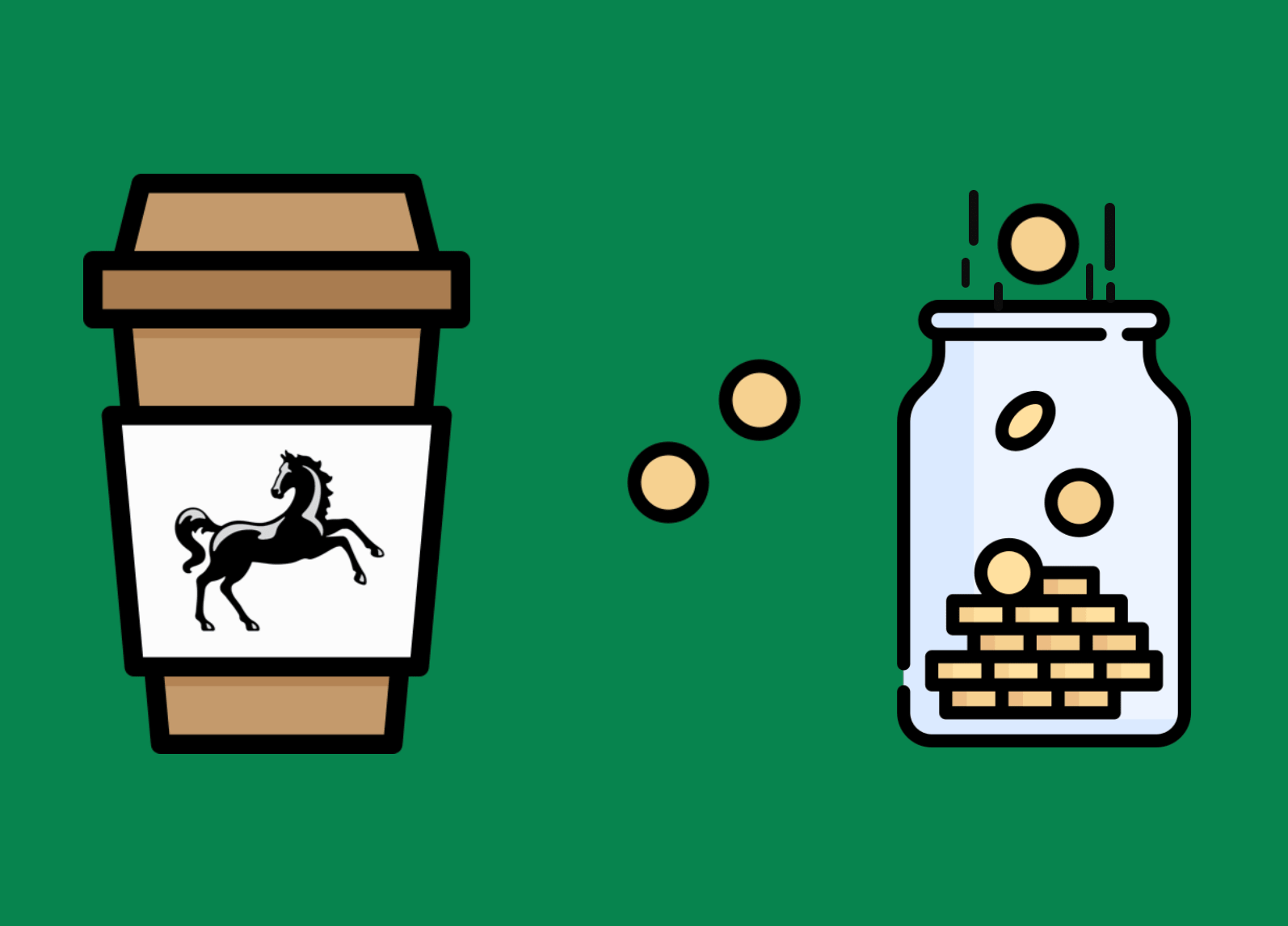
The big question, what does Lloyds have to offer for micro-saving? It turns out, they already have a service. Save the change® : It rounds up the amount you spend to the nearest pound. For example, if your coffee costs £2.20, they transfer 80p from your current account into your savings account. Thereby combining the spending and saving.
BUT, Why don’t people use this service? We conducted research and interviews amongst lloyds users and We were able to get insights from the users about Save the change® by distinguishing moments of 'awareness', 'access', and ‘action’.
Awareness
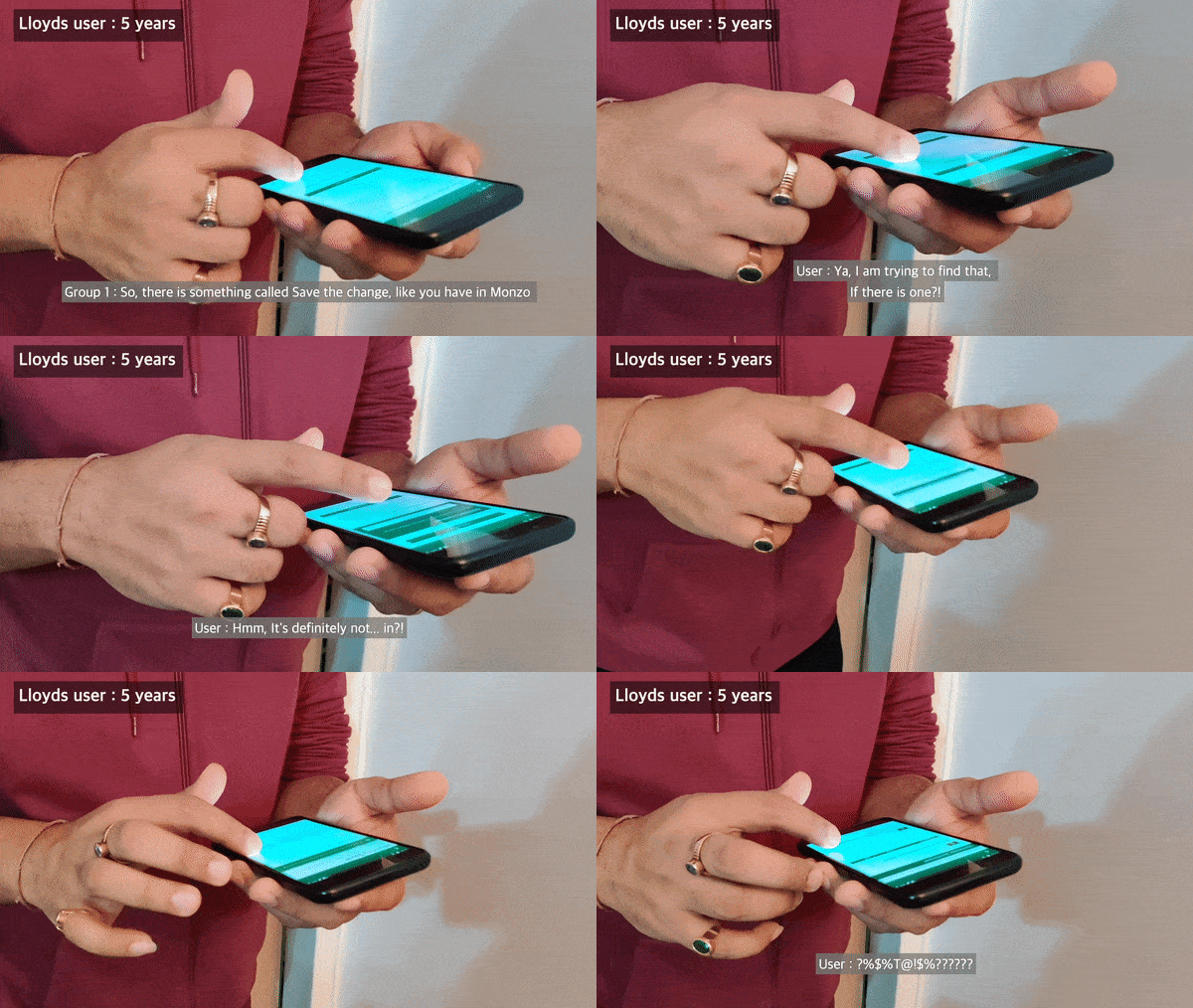
Lloyds Bank users have not used or did not recognize there was Save the Change® in their app.
Access
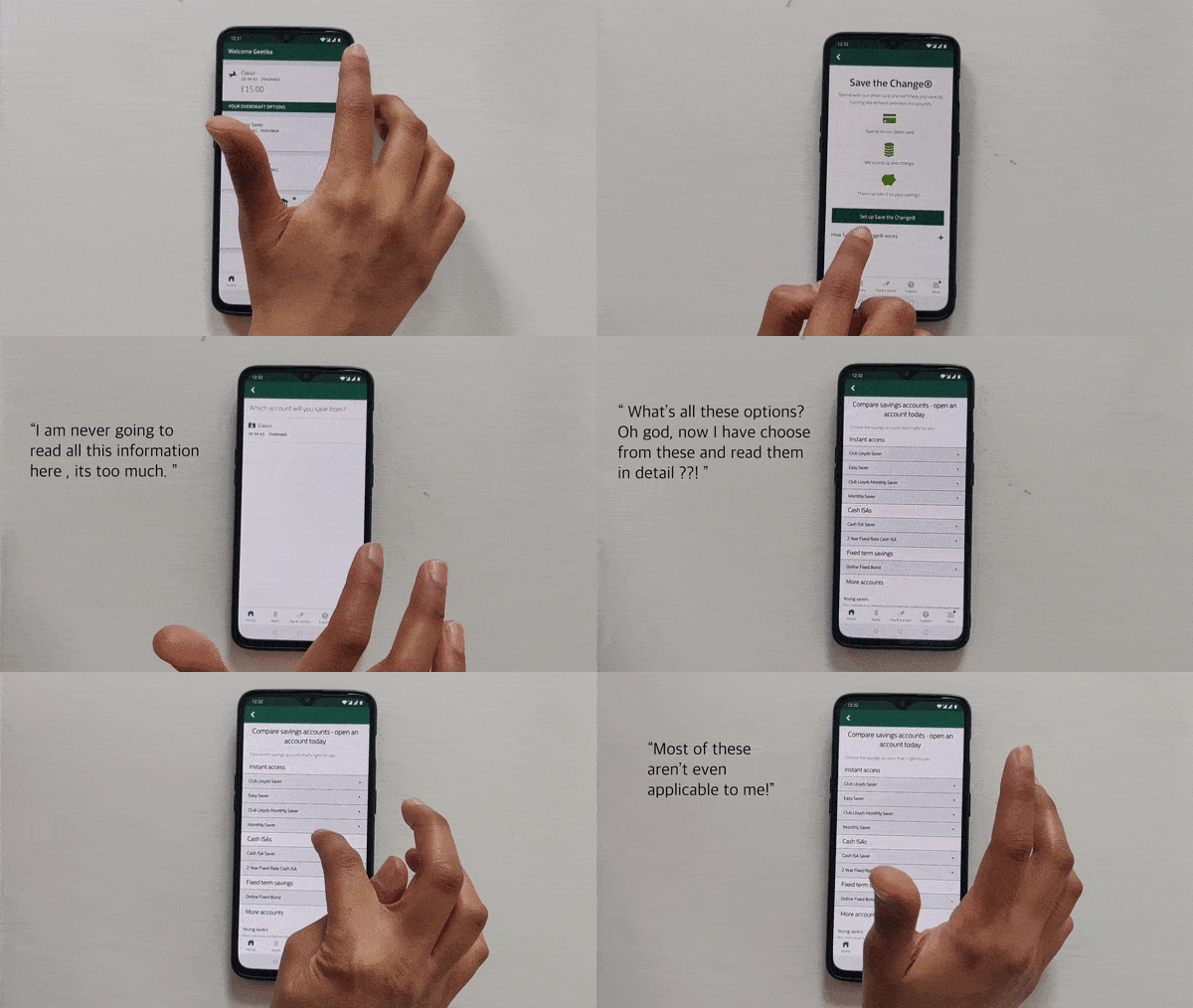
Information of getting to know Save the Change® is limited since the app provides too many steps and information for the users.
Action
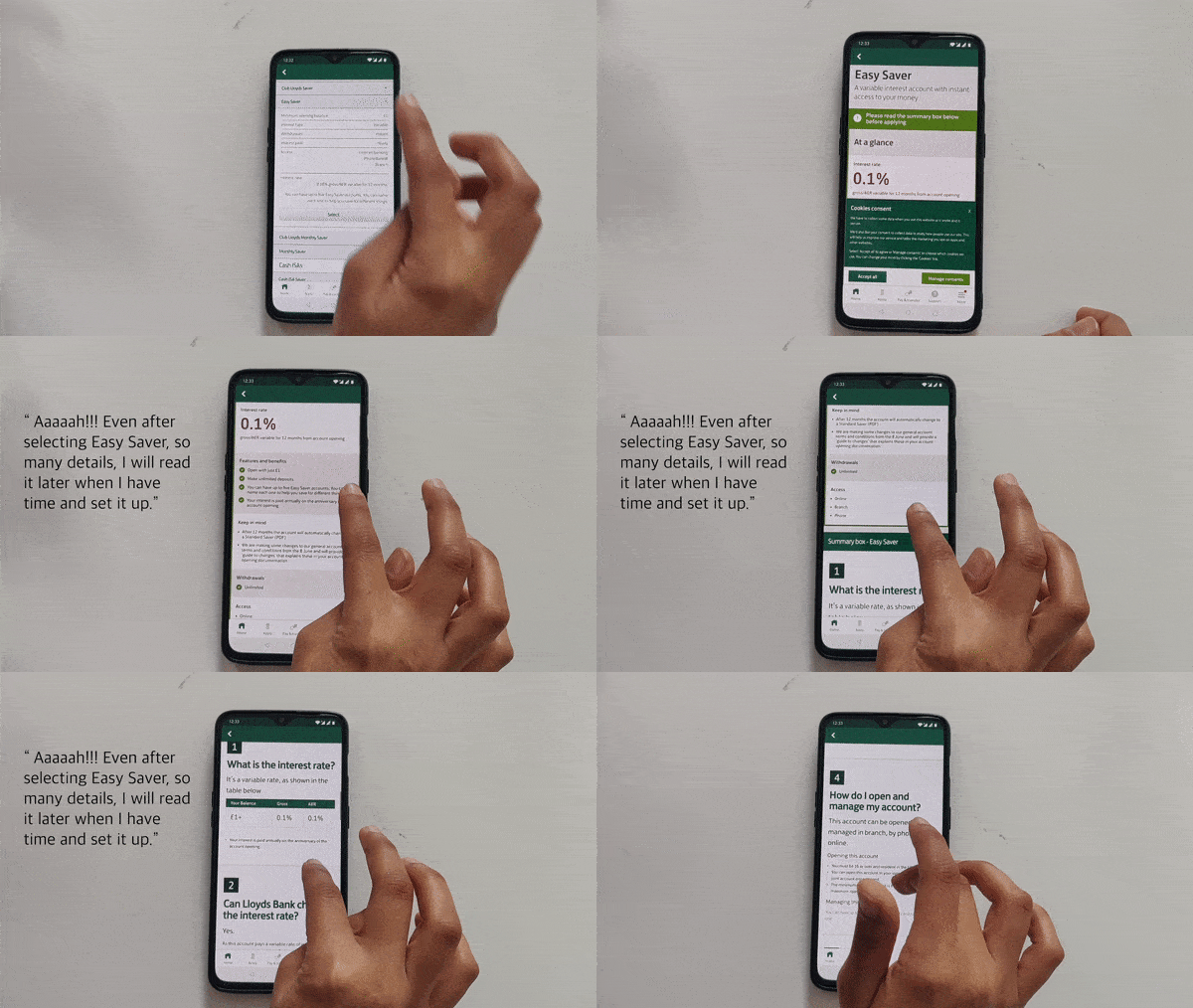
After accessing Save the Change®, the detailed information about the service is not appealing for the users making them to skip the process.
Awareness
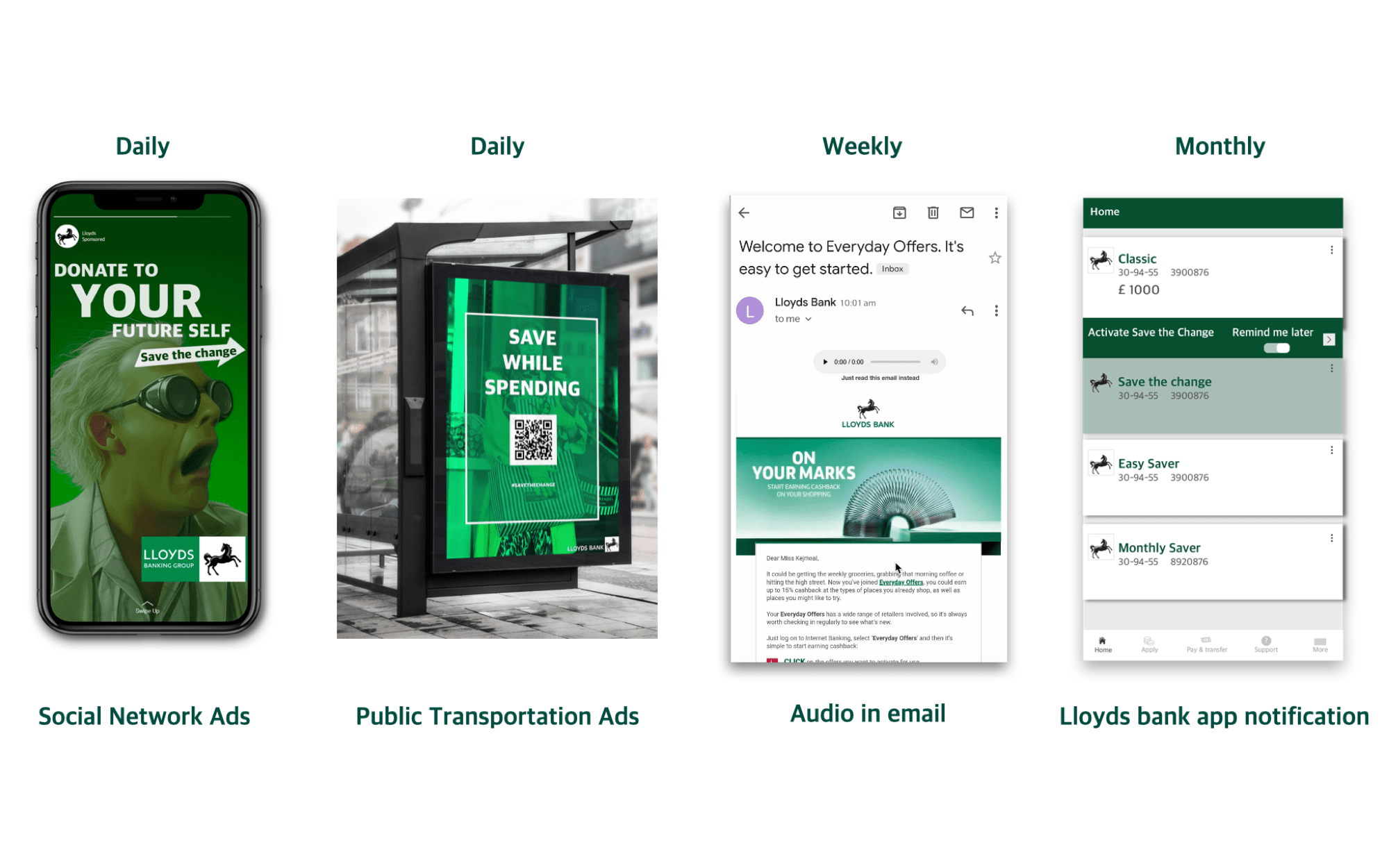
The key to awareness is to make ease to spot the opportunity. We identified different channels that best suits our target user, young adults.
First, we want Lloyds to have a presence on social media, and make their tone of voice more appealing to young adults. The same example can be used in the physical world, where people usually gather during the day such as the bus stop.
Our target users rarely use the Lloyds app, except for making transactions to others. So we decided to put a notification section in the home page to encourage them to add STC.
Finally, Lloyds uses emails to reach their customers but no one reads them. The better way is to arrange emails arrive in the morning, when people are commuting with their headphones on. So why not include an audio track with summery of the email?
Access and Action
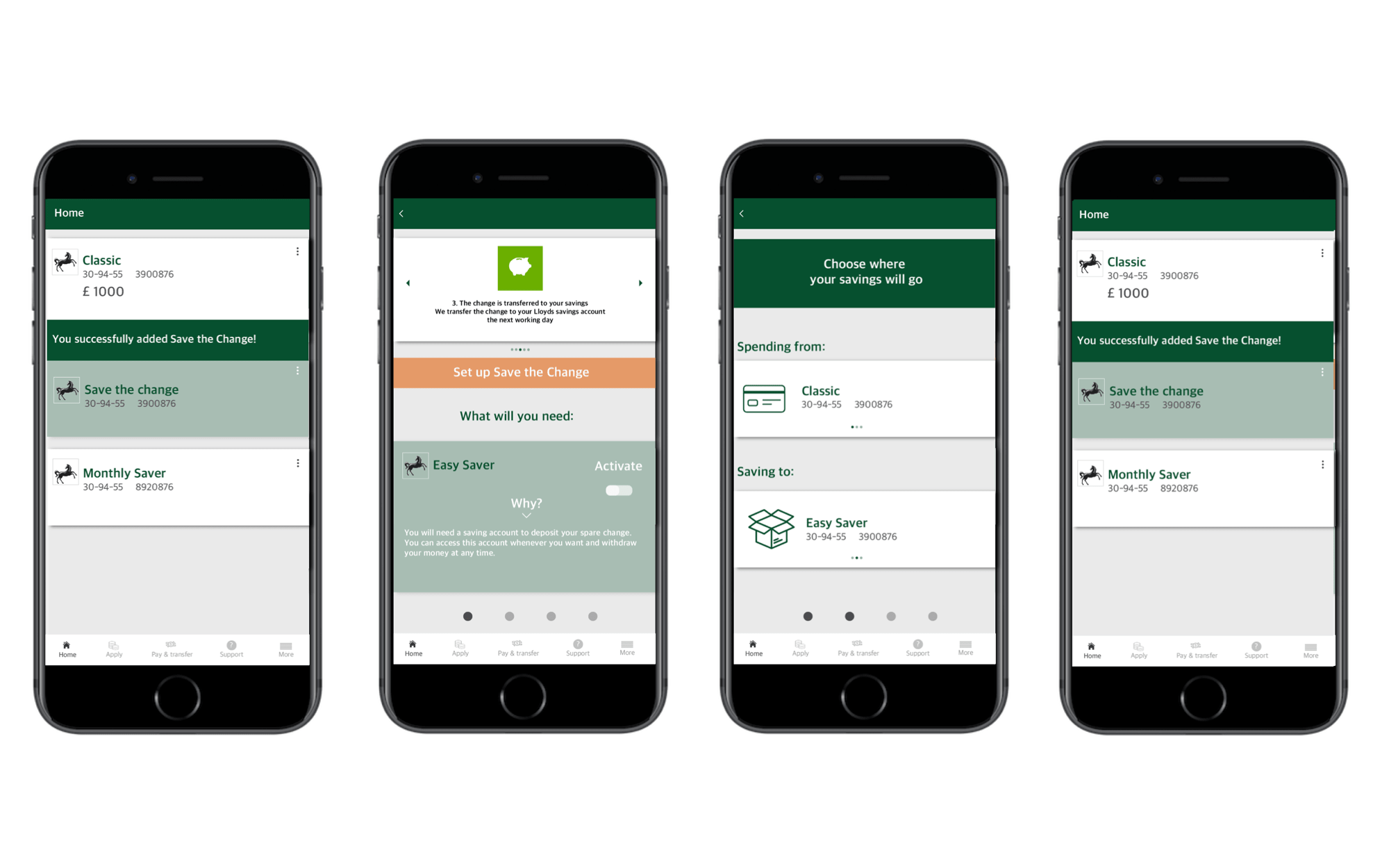
The key to increasing access and action is to make STC easy to understand, simple guided steps to set up, and an appropriate tone of voice. Save the change is now highlighted on the Landing page of the app.
Now users can navigate simply to set it up. They can see where the money is going to and from. They only get the information that is relevant to them. By increasing access Lloyds Banking app enables users to take action instantly.
Ideation
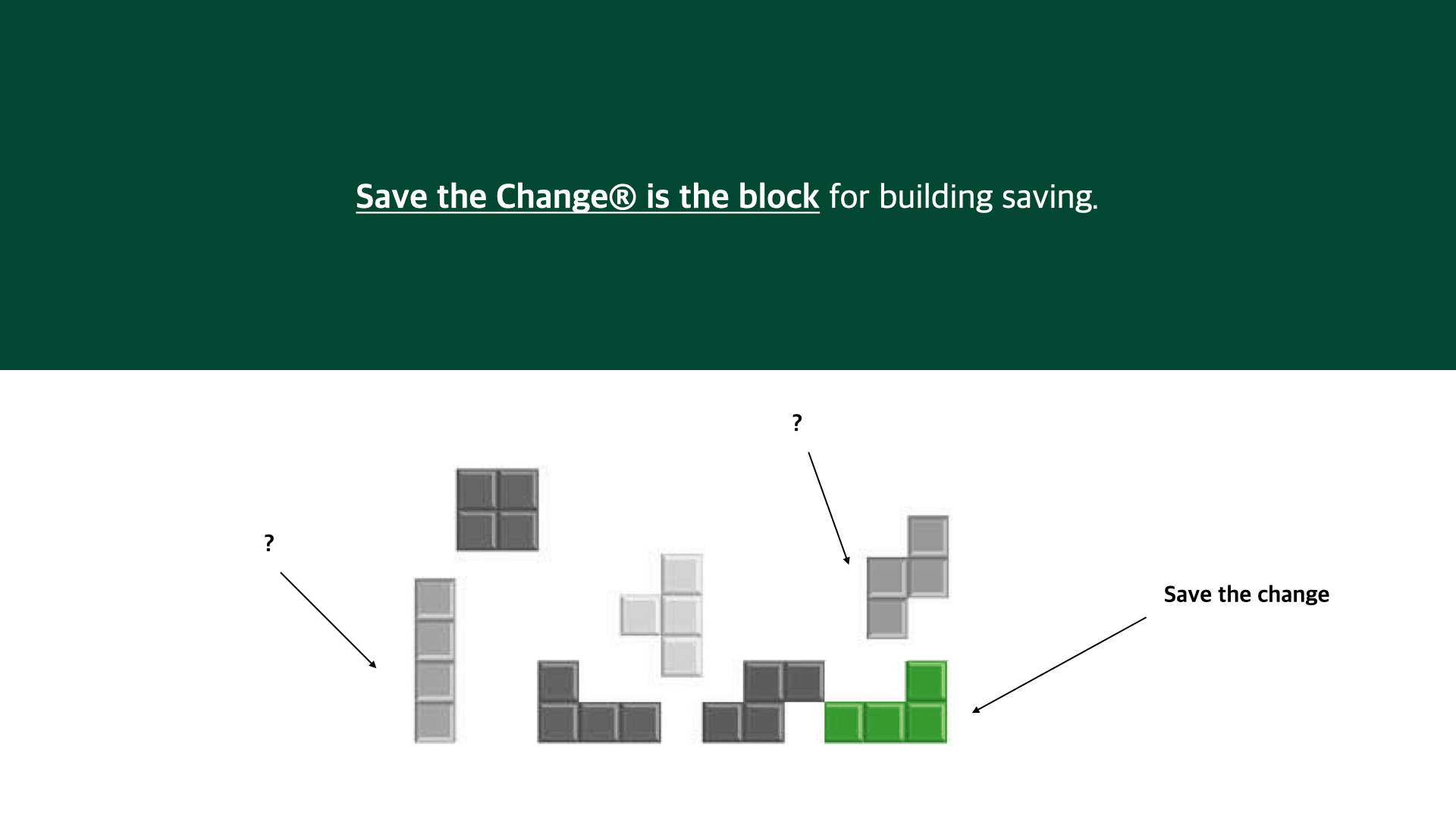
Like the game of Tetris, STC is just a block in users' savings. Our team wanted to explore what other kinds of blocks can Lloyd provide to users. So, we started to ideate for new services of micro-saving based on our insights from field and academic research.
Our team thought changing one’s perception and behavior is very difficult, so we tried to utilize their current behavior and make it work in a good way. We also used tactics from behavioral economics to encourage them to join micro-saving services.
Prototype
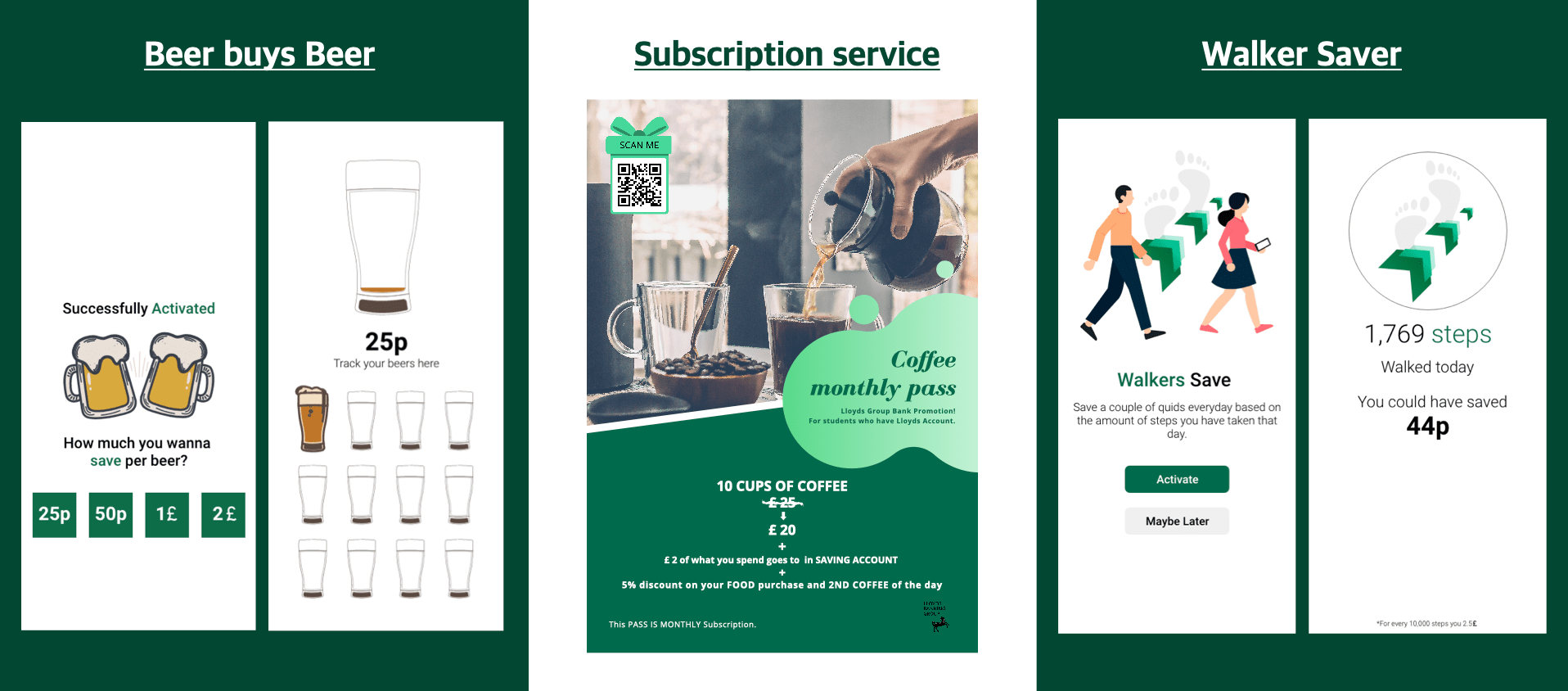
Created 3 different prototypes to test our new ideas.
“Beer Buys Beer”
Each time you buy a beer, an amount of your choice will be transferred into your savings account using the beloved habit as the moment of saving.
Build a prototype with Adobe XD.
“Coffee Subscription Service”
This service gets you a discount on the coffee you purchase, at the same time, a part of spending goes to saving account automatically. This guides the user to understand that some of the money you have earned through the discount is used for savings.
Printed posters and advertised to encourage people to use the QR cord for using the service. This QR cord counts the people that allow counting how many people are interested in it.
"Walker Saver"
You can save money based on the number of steps you have taken per day.
Build a prototype with Adobe XD.
Result
We conducted prototype test by interviewing with 5 to 6 of students & working young adults at RCA for each prototype. As we prototyped user habits, we learnt that most of them think a good behaviour(saving) can offset bad behaviour(drinking beer). Offering them customisation works as people like the choice and freedom. We learnt that a service should be easy to understand and clear on how it works and adds value. Sometimes using usual habit (walking) can work negatively as people are not convinced without having specific reasons for saving.
Solution
Based on the research and prototypes, Lysa suggests as a solution to make saving become a part of the target users' lifestyle.
Mission
Help young adults build a saving habit
Vision
Creating a nation of savers by 2030
Strategy
Micro-saving as a building block to create a saving culture
Values
Making saving a part of User’s lifestyle
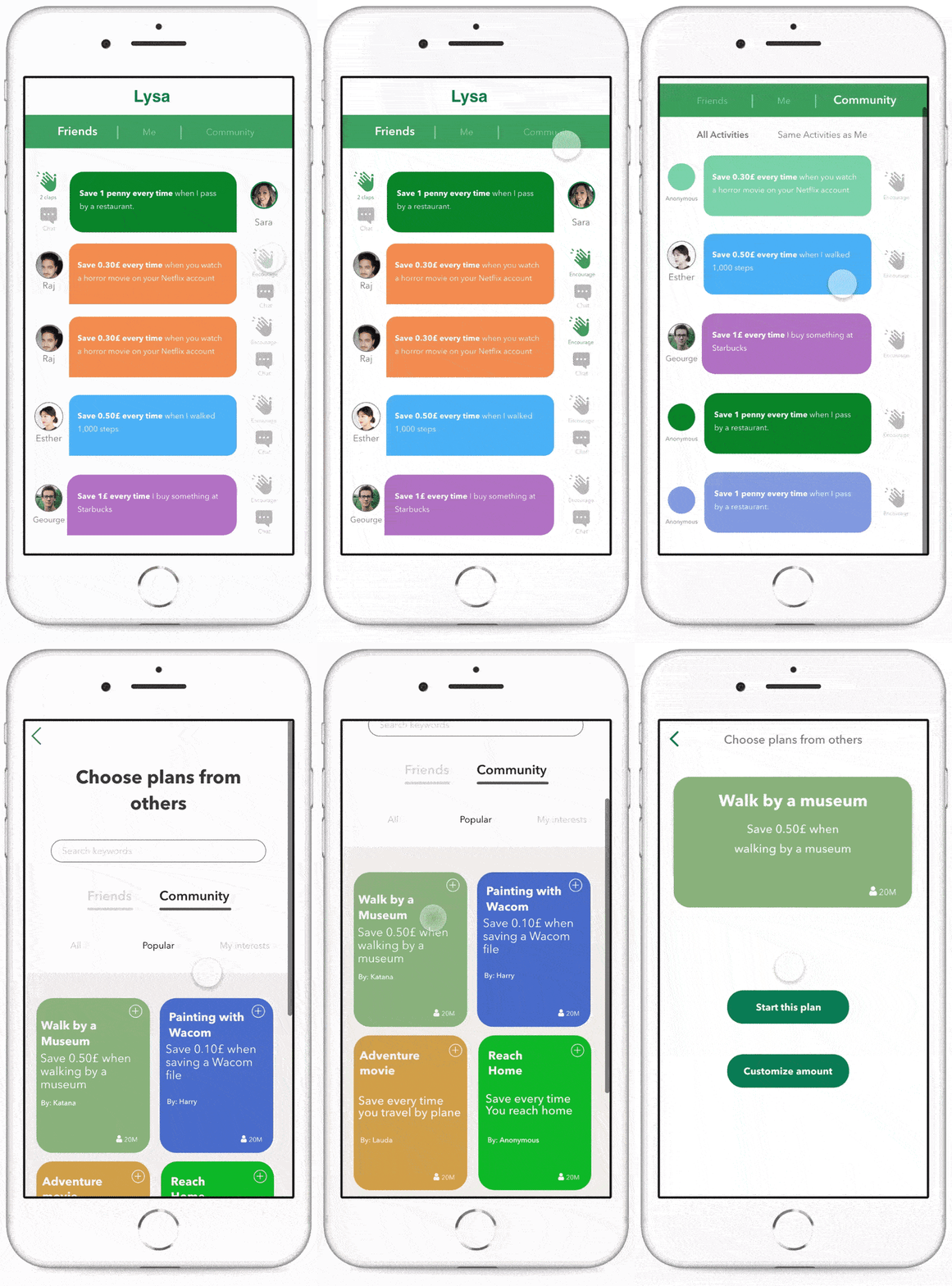
Link your daily activities to saving opportunities and uniquely choose how you want to save it.
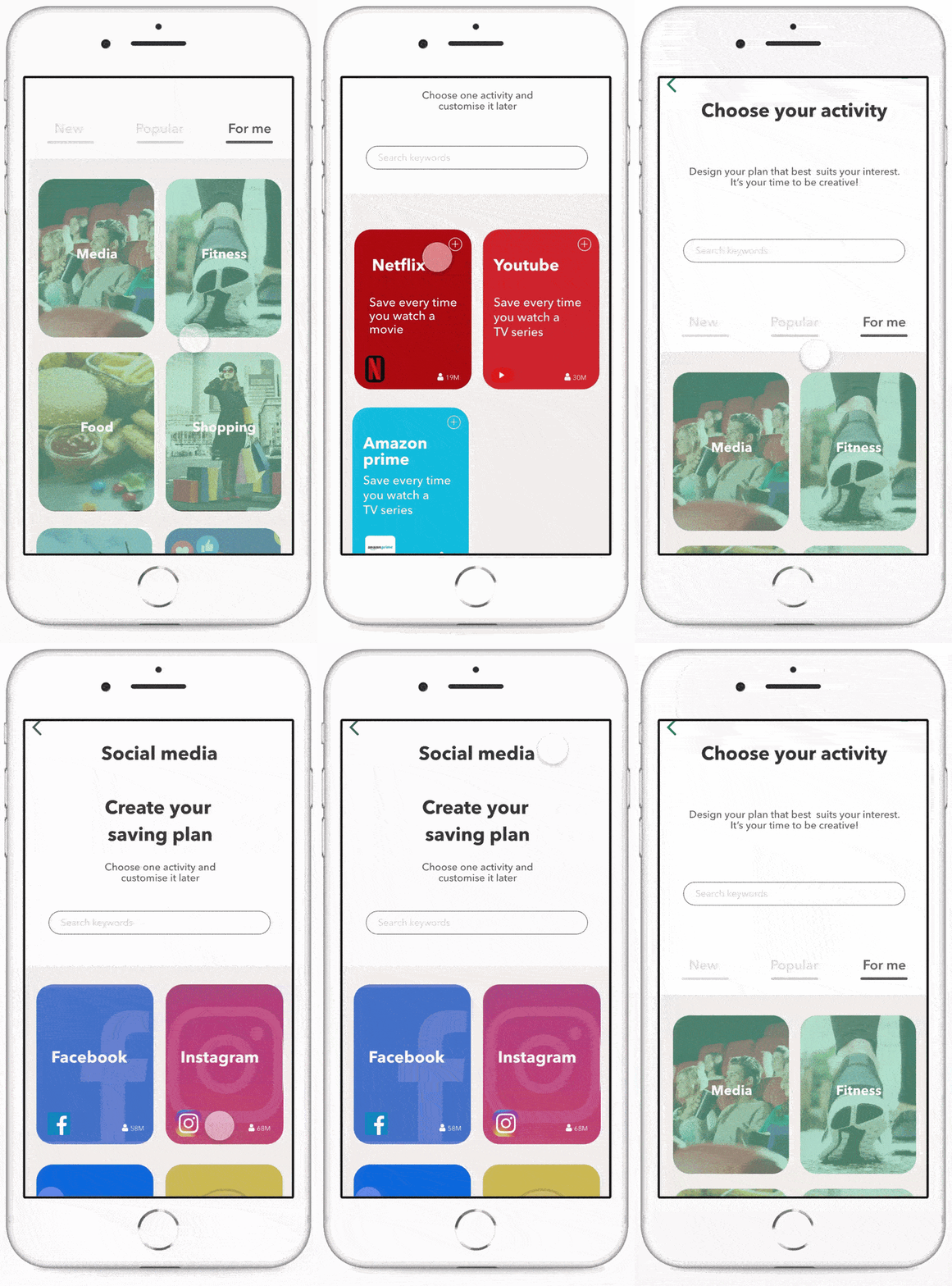
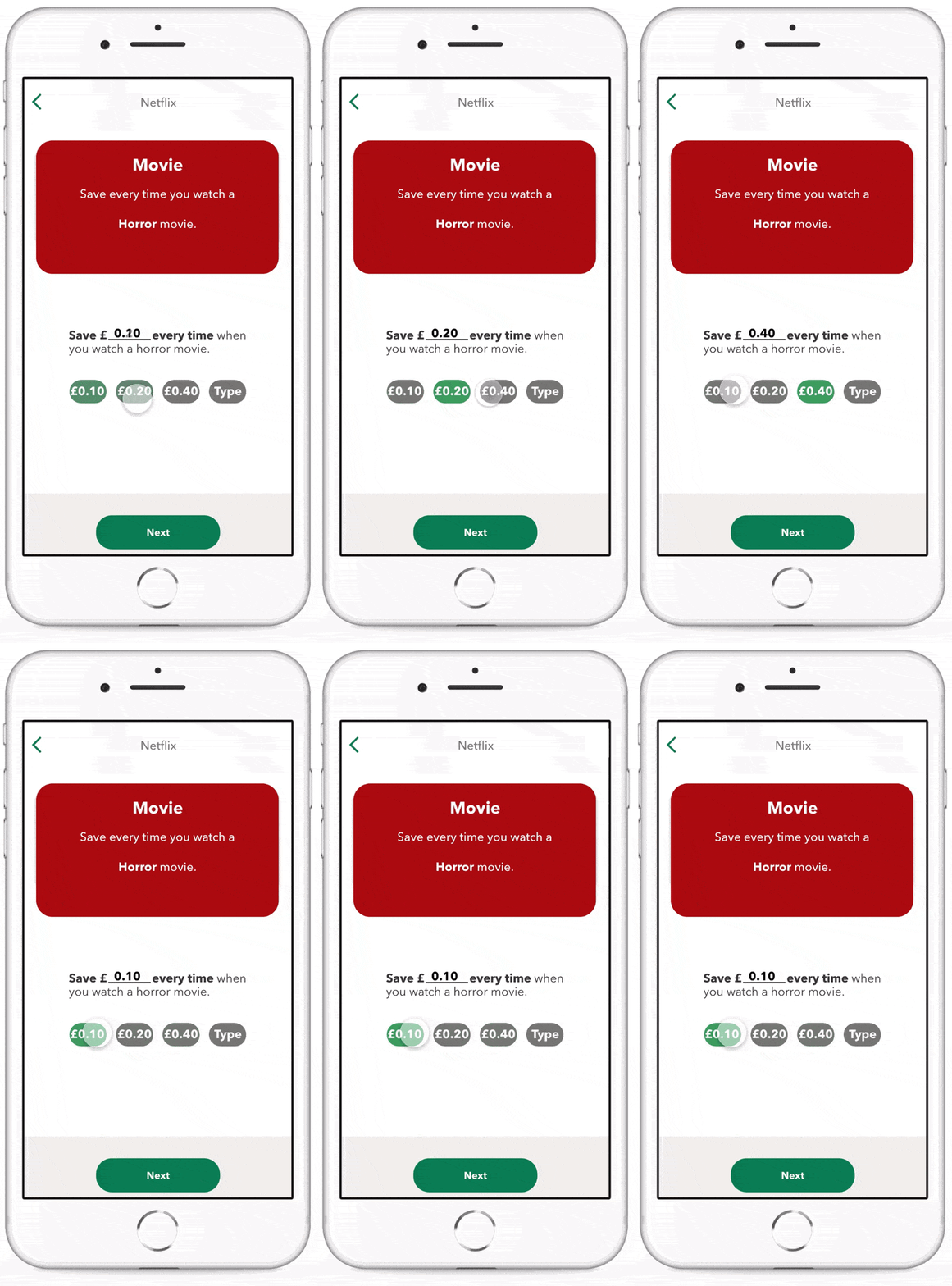
Choose the amount to save per your trigger, Lysa will automatically save for you.
Involved in the Lysa community and get inspired and encouraged by the people around you.
Are you interested in my project and want to know more?
Contact me!
guswls1994@gmail.com